Monday, 24 February 2014

General Dentistry Professionals in Colorado Springs Talk about Dental Implants, PART 1

This two-part article series provides an overview of dental implants as a sophisticated solution to single and multiple missing teeth.


Tooth loss is a fairly common problem that can happen as one ages. It’s most frequently the result of conditions such as tooth decay and gum disease - conditions that are caused by neglect for proper oral hygiene, a lack of professional preventative healthcare, a bad diet and habits such as tobacco use. Tooth loss can also be caused by accidental trauma and by certain illnesses. Either way, there are a number of teeth replacement solutions on the market, but the one most highly recommended by general dentistry professionals in Colorado Springs is dental implants.

In this two-part article series, we shall be taking a look at what dental implants are, how they work and what benefits they can offer Colorado Springs residents as functional and cosmetic solution to single and multiple missing teeth.

What Are Dental Implants?
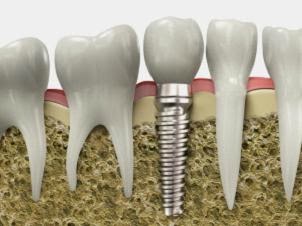

Dental ImplantsDental implants are the only devices available that actually replace both the root and the crown of the missing tooth. Removable dentures and tooth-supported bridges only replace the visible portion of the tooth structure, the crown, which can cause problems for Colorado Springs residents in the long run. But before we get to the benefits of dental implants, let’s take a look at the anatomy of this fantastic technology:

“Dental implants are artificial ‘tooth roots’ that are manufactured from medical grade titanium. This is then used to support a ceramic tooth crown,” explain Colorado Springs dentists. “Titanium is an exceptionally strong metal and it is also non-corrosive, stable and non-toxic. The composite materials used to make the tooth crown are chosen for durability and strength, so a patient’s replacement tooth has the potential to last several decades if not a lifetime!”

How Do Dental Implants Work?


“Dental implants are manufactured from medical grade titanium metal, which has the unique property of being 100% biocompatible,” say general dentistry professionals in Colorado Springs. “This means that, over the weeks and months following surgery, the jawbone surrounding the implant will actually fuse to it, forming a strong bond that prevents the dental implant from being loose or falling out.”
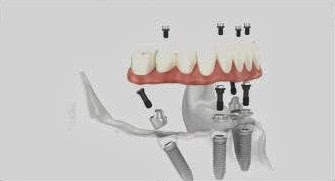
All on 4 Dental Implants“Dental implants are surgically placed at a predetermined site in the mouth… usually at the site of the missing tooth or teeth. In the case of whole arch restoration, the positioning of the implants is chosen strategically so that as few implants as possible can be used to provide support for a customized prosthetic dental bridge, which looks like a complete set of teeth and gums,” explain general dentistry professionals in Colorado Springs.

“The procedure itself only takes an hour or more, depending upon what a patient is having done and how many teeth they’re having replaced. Recovery only takes a few days, although you will be required to stick to a diet of soft foods for a few weeks while your jawbone heals.

Stay Tuned for Part 2


To read more about dental implants & about their benefits over other teeth replacement methods, stay tuned for the second Part of this article series, courtesy of Colorado Springs dentists.

Thursday, 20 February 2014

Colorado Springs Dentists Discusses Removable Dentures and Alternatives, PART 2

This two-part article series addresses traditional removable dentures as a solution to multiple missing teeth and edentulism. It then goes on to explore the alternative - dental implants - and why they are regarded as more beneficial to patients.


Welcome to the second half of this two-part article series on removable dentures and the more modern teeth replacement technology on the market: dental implants. In Part 1, Colorado Springs dentists discussed what removable dentures are, how they work and what some of the challenges associated with them are. In this article, we shall discuss the more modern alternative - dental implants - and how they offer Pueblo CO residents a far more comfortable, functional and aesthetic solution to rampant tooth loss and edentulism (toothlessness).

What Are Dental Implants?


Dental Implants

According to Colorado Springs dentists, dental implants are essentially artificial tooth roots. As you can see in the image above, they are tiny screws made from the exceptionally strong metal titanium. These devices are used to replace the roots of missing teeth and then to offer strong support for an overlying dental appliance, such as a ceramic crown or fixed bridge. These restorations replace the visible portion of the missing tooth or teeth.

How Can They Be Used To Replace All Of My Teeth?


Dental implants are popularly used to replace one or two missing teeth, but they can also be used to provide Pueblo CO residents with a complete set of new, non-removable teeth. In these cases four or more dental implants are strategically placed in regions of the mouth that contain a greater volume of strong and healthy bone tissue. A fixed (non-removable) prosthetic dental bridge is then attached to this array of implants, thus providing the patient with a complete set of beautiful teeth again (see image below).

All on 4 Dental implants

What Are The Benefits of Dental Implants?


Unlike traditional removable dentures, dental implants are placed “permanently” in the mouth and the new teeth they support are non-removable. This eliminates many of the challenges and hassles people with dentures have to contend with, such as removing their teeth for cleaning and at nighttime. Dental implants derive all the support they need from the underlying jawbone, as is the case with natural teeth. As a result, Pueblo CO residents are spared all the pain and discomfort caused by bulky dentures pressing down on and rubbing against their gums.

According to dentists in Colorado Springs, some of the other benefits afforded by dental implants include:
  • Dental implants feel natural,
  • Dental implants support much slimmer and more comfortable replacement teeth,
  • They are cared for and cleaned similarly to natural teeth,
  • Dental implants enable patients to bite down with greater strength and to eat most of their favorite foods,
  • They give patients a more beautiful, natural and confident smile.

Perhaps most importantly, dental implants resume the function of the missing tooth root, which helps to keep the underlying jawbone tissue stimulated. Through this stimulation, jawbone health is preserved, which prevents the early onset of aging through bone volume loss. Wearing removable dentures does nothing to prevent atrophy and the loss of bone volume in the jaw explains why denture wearers typically get that aged, sunken appearance around the mouth.

In Conclusion


Dental implants offer Pueblo CO residents a much better, more functional, comfortable and aesthetic solution to missing teeth. They also help to promote jawbone health, which prevents the deterioration of one’s natural youthful facial contours. It’s for these reasons and many more that Colorado Springs cosmetic dentists tend to recommend implants to those in need of new teeth.

Sunday, 16 February 2014

Cosmetic Dentist in Pueblo CO Discusses Removable Dentures and Alternatives, PART 1

This two-part article series addresses traditional removable dentures as a solution to multiple missing teeth and edentulism. It then goes on to explore the alternative - dental implants - and why they are regarded as more beneficial to patients.


One way or another - whether through personal experience or having seen a loved one wear them - we all have an idea of what removable dentures or “false teeth” are. Prior to the innovation of dental implant techniques capable of replacing a patient’s entire set of teeth, dentures were really the only solution cosmetic dentists in Pueblo CO had available. If you had lost most or all of your original adult teeth, then a future of denture wearing was what you had to look forward to.

Technology has advanced considerably since these days and thank goodness it has because the teeth replacement techniques available today are far more comfortable and offer patients improved functionality and smile aesthetics. In spite of this, removable dentures are still the most popular method of teeth replacement, so let’s take a look at this technology.

What Are Dentures?


DenturesRemovable dentures are artificial teeth that consist of an upper or lower set of ceramic teeth mounted into pink plastic or acrylic gums. Dentures are typically custom made for the Colorado Springs resident, although they are available in a range of standard sizes. Needless to say, custom-made dentures are likely to fit better and more comfortably.

How Do Dentures Work?


Dentures are essentially placed in the mouth over the gums where they rely on their bulk to remain stable. Other than this, there is nothing holding them in place, which is why they tend to shift around when eating and during conversation. It’s for this reason – for the discomfort associated with traditional dentures - that many dentists in Pueblo CO recommend dental implants instead, or at least dentures that are secured in the mouth using dental implants.

Challenges To Be Aware Of


Colorado Springs Cosmetic DentistsMany of the challenges associated with wearing dentures arise from the fact that they are loose in the mouth. There is nothing really preventing them from moving around, which can cause the following problems:

  • Oral discomfort,
  • Constant self-consciousness,
  • Difficulty eating,
  • A low self-esteem,
  • Unwillingness to smile openly.

Additionally, Colorado Springs cosmetic dentists warn patients that removable dentures do tend to press down on and rub against the gums during eating and conversation, which can cause them to become quite sore and inflamed. As a result many patients have to keep a tube of anesthetic gel handy to help relieve some of the discomfort associated with wearing dentures.

Other problems associated with the bulkiness and looseness of dentures include:


  • Impediment of taste ability (bulkiness covers the soft palate),
  • Lesser ability to experience the texture and temperature of one’s food,
  • The triggering of the gag reflex,
  • The repeated cost of anesthetic gels and adhesive strips to help secure dentures,
  • Thin, stretched lips and aged smile aesthetics.

What Are The Alternatives?


Thankfully, as it was mentioned, Colorado Springs residents do have an alternative to dentures. Dental implants have been around for many decades, but it’s only recently – with the advent of newer, more sophisticated and less expensive techniques – that they’ve become accessible to the “average” person in need of a complete set of new teeth. The benefits they offer aren’t only aesthetic and functional in nature; dental implants also promote much better jawbone health…

Stay Tuned For Part 2


In the second half of this article series, cosmetic dentists shall explain the virtues and benefits of dental implants as an alternative teeth replacement solution to traditional removable dentures.

Thursday, 30 January 2014

Non-Surgical Cosmetic Dentistry Treatments for Colorado Springs Residents

This article provides a complete overview of the various non-surgical cosmetic treatments that are available for the enhancement of one’s smile aesthetics.


Your smile is one of your most important and alluring physical assets. While a life of good oral hygiene and regularly scheduled dental check-ups and professional cleanings can go a long way in protecting your smile against the marching on of the years, eventually, general wear-and-tear, physical trauma and repeated exposure to staining foods and beverages can deteriorate the appearance of your pearly whites. This can make your smile appear dulled and uneven.

Thankfully, cosmetic dentists offer Colorado Springs residents an arsenal of non-surgical treatments and procedures that are designed to restore the appearance of even the most damaged and worn smile. In this article, we shall be providing a brief explanation of these procedures.

Cosmetic Dentistry Treatments


Colorado Springs Cosmetic DentistTeeth Whitening: Teeth whitening is one of the quickest, easiest and simplest of the Colorado Springs cosmetic dentistry services. Patients usually have a custom mouth guard created for them by their dentists and then return home with a whitening kit. The treatment takes place over the course of one or more weeks and consists of wearing the mouth guard (with a special bleaching gel) daily for an hour or two. Teeth whitening can substantially lighten the shade of the dental enamel and remove the appearance of surface stains, making your smile appear much brighter and more naturally beautiful.

Dental Veneers: “Veneers are ultra-thin shells of ceramic material that are custom made to fit over the front surface of a damaged, cracked, uneven or deeply stained tooth. They cover up the appearance of deep staining and/or discoloration that cannot be addressed with a simple tooth whitening cosmetic treatment and can be used to replace missing tooth structure,” explains a cosmetic dentist in Colorado Springs. “Dental veneers can also be used to fill large gaps between teeth, so they’re quite versatile in their applications!”

Bonding: Bonding involves the application of a special dental cement to the surfaces of a tooth that has sustained some kind of damage. “The cement used in the bonding process is composed of ceramic materials, so that it looks just like natural dental enamel, while still being hard and durable,” says the Colorado Springs cosmetic dentist. “Bonding can be used to address minor flaws in the tooth structure, as well as cavities, cracks, fissures and chips. It can also be applied to the biting surfaces of teeth with deep cusps, effectively helping to prevent decay caused by trapped food.”

 Cosmetic Dentistry Treatments At Colorado SpringsDental Crowns: Crowns are typically recommended for cases where a tooth has become so badly damaged or decayed that a large portion of the natural crown needs to be removed. The tooth is then filed down to support an aesthetic tooth replica, which is carefully fabricated to be virtually indistinguishable from a natural tooth in both function and appearance. “Dental crowns can dramatically improve the appearance of one’s smile, especially if a patient has very damaged, heavily stained and uneven teeth,” explains the Colorado Springs cosmetic dentist.

A Final Note…

Through one of the above-mentioned cosmetic treatments (teeth whitening, porcelain veneers, bonding and dental crowns), you too can have your smile confidence restored. Speak to a cosmetic dentist in Colorado Springs about which treatment would best cater to your needs.

Wednesday, 29 January 2014

Colorado Springs Dentists Answer: What Could Be Causing Your Bad Breath? PART 3

This three-part article series provides an overview of the various factors, ailments and conditions that could be causing your breath to turn sour.


Welcome to the final installment of this three-part article series on the various causes of bad breath. In Part 1, we spoke to Colorado Springs dentists who explained that bad oral hygiene, tooth decay and gum disease (gingivitis and periodontitis) were the most common causes of bad breath. In Part 2, we shifted our attention to the less obvious causative factors, which included respiratory tract infections and a condition known as “dry mouth” (linked with alcohol intake, habits such as smoking and certain medications.)

In this article, the final installment of the series, we’ll provide some final possible causes behind chronic bad breath, some of them very surprising indeed…

The Causes of Bad Breath, Continued…

6. Breath Mints

Breath Mints
This may sound completely counter-intuitive, but sucking on a breath mint can actually achieve quite the opposite of the desired effect! “Mints contain sugar, which encourages bacteria to thrive,” explains a dentist in Pueblo CO. “While they may freshen your breath as you suck on them, after five or ten minutes, your breath can actually turn sour as oral bacteria multiply and produce more smelly wastes. This applies to anything with sugar in it, which is why we always encourage patients to brush or at least rinse their mouths out after a sugary beverage, snack or treat.”

Even better: get yourself a pack of sugar-free gum. “Getting into the habit of chewing gum when you want a breath freshener is excellent for your teeth because it stimulates the production of saliva, which helps to wash away food debris and kill bacteria,” advise Colorado Springs dentists.

7. General Health Issues

As it was explained in Part 2 of this article series, oral problems aren’t always to blame for bad breath. There are a host of general health problems and diseases that are linked with halitosis, such as diabetes, respiratory tract infection and liver disease. If your dentist in Pueblo CO has told you that your teeth and gums are healthy, and yet you still struggle with bad breath, book yourself an appointment with your GP. Explain your symptoms and get a diagnosis. The health of your mouth is closely linked to the health of your body and it can provide some very important indications of possible problems, so pay attention!

8. Tongue Health and Hygiene
Tongue Health
Take a look at your tongue in the mirror… what color is it? It should be a healthy pink color all the way to the back of your mouth. Yet, sometimes it can have a whitish coating, which is typically a result of oral bacteria. “When you brush your teeth, you should also be brushing your tongue until it looks nice and pink,” say Colorado Springs dentists. “Your tongue’s surface, being rough, is full of excellent hiding places for oral bacteria, so your tongue could be causing your breath to go bad.”

If you don’t like brushing your tongue, there are also tongue scrapers on the market, which are effective at removing plaque, bacteria and food debris from the surface of your tongue.

A Final Note on Busting Bad Breath

Remember, good oral health and hygiene are fundamental in the fight against bad breath. Never be too shy to ask a friend or family member for a subjective opinion on the quality of your breath because it can compel you to seek treatment for problems that, if left undiagnosed, may ultimately cause to tooth decay and loss.

Tuesday, 28 January 2014

The Colorado Springs Dentist Answers: What Could Be Causing Your Bad Breath? PART 2

This three-part article series provides an overview of the various factors, ailments and conditions that could be causing your breath to turn sour.


Welcome to the second installment of this three-part article series on the various causes of halitosis, or bad breath. In Part 1, an experienced Colorado Springs dentist explained that bad oral hygiene, tooth decay and gum disease (gingivitis and periodontitis) were the most common causes of bad breath. “Oral bacteria produce wastes that contain smelly sulfurous compounds… so the more bacteria there are in your mouth; the more likely your breath will be bad. Tooth decay and gum disease are also caused by oral bacteria, which explains why bad breath is one of the key symptoms of these conditions,” explains the dentist.

But, what if you do look after your teeth properly and still suspect that you have bad breath? According to Colorado Springs dentists, bad oral hygiene isn’t always the culprit behind halitosis. There are a number of other ailments that can cause your breath to smell bad, both directly and indirectly through the faster build-up of bacteria.

The Causes of Bad Breath, Continued…

4. Sinus and Respiratory Problems


Bad BreathIt can be a terrible nuisance: you give your teeth a thorough scrub and not even 10 minutes later, you suspect that your breath has gone bad. Why else would your colleague be looking at you through rolled up eyes and a wrinkled nose? It’s not that this is a one-time problem either… it’s something you’ve consistently noticed and yet, the dentist tells you that you are in excellent oral health.

“In many cases, the solution to halitosis is not a visit to the oral hygienist,” explains the dentist in Colorado Springs. “Rather, it’s a visit to your doctor! There are a host of general health issues that can cause bad breath and an infection in the respiratory tract (especially the sinuses) is a key candidate. Bacteria in your throat, sinuses, larynx and/or lungs also produce sulfurous wastes and these gases taint your breath as you inhale and then exhale.”

The solution is therefore fairly simple: visit your medical doctor for a diagnosis and then treatment!

5. Dry Mouth


Dry MouthAnother key cause of bad breath is a condition known as “dry mouth.” As the name suggests, this condition is characterized by the impeded or slowed production of saliva in the mouth. “The problem with this condition, especially when it’s a chronic problem, is that it renders your teeth and gums more vulnerable to oral bacteria,” explains the dentist in Colorado Springs. “Saliva is a natural anti-bacterial and your body’s first line of defense against the microorganisms that cause cavities and tooth decay.”

What causes dry mouth?


“Alcohol causes dry mouth, as do habits such as smoking and chewing tobacco. There is also a host of medications that can cause dry mouth, including anti-histamines. If you’re on any chronic medications for dry mouth, you should speak to your treating physician about an alternative drug or a different dose so that you can perhaps offset the side effects. If this is not an option for you, you will have to do what you can to mitigate the risks of dry mouth, such as drink more water, brush more frequently and perhaps rinse with an anti-bacterial mouthwash,” advises the Colorado Springs dentist.

Stay Tuned for Part 3


Stay tuned for the final installment of this three-part article series to find out more about the different causes of halitosis, or bad breath.

Friday, 10 January 2014

The Dentist in Colorado Springs Answers: What Could Be Causing Your Bad Breath? PART 1

This three-part article series provides an overview of the various factors, ailments and conditions that could be causing your breath to turn sour.


Let’s face it… there’s nothing quite as unattractive as halitosis. You could be a cover girl for Maxim Magazine or a ramp model for Giorgio Armani, but if your breath pongs, no one’s going to want to hold a conversation with you. One of the better-known causes of bad breath is pungent food such as onions and garlic. But, according to a dentist in Colorado Springs, there are a great variety of factors that can cause one’s breath to sour. In this three-part article series, we shall be providing an overview of these factors.

The Causes of Bad Breath


Oral Hygiene

1. Oral Hygiene (or a Lack Thereof)


In almost every case of halitosis, the cause is related to oral bacteria. These microorganisms use the food debris left behind in your mouth to fuel their growth and proliferation. But just like every living organism that eats, they too produce waste products and these tend to contain stinky sulfurous compounds.

“The patients who brush and floss their teeth regularly and thoroughly should not suffer from halitosis and should, for the most part, have clean and pleasant breath,” explains a Colorado Springs dentist. “Good oral hygiene is integral in the removal of the bacteria and bacterial wastes that lead to plaque accumulation and bad breath.”

2. A Decayed Tooth


“Another cause of halitosis is tooth decay, which also tends to be a result of poor oral hygiene and a diet that consists mainly of sugary and acidic foods and beverages. But decay isn’t always the result of neglecting one’s oral hygiene. It’s not uncommon in children who are making the transition to adulthood to struggle with a particularly tenacious milk tooth. The exposed pulp chamber of the loose tooth offers bacteria an excellent environment in which to multiply, away from the roving bristles of their toothbrush. Consequently, the tooth can begin to decay,” explains the dentist in Colorado Springs.

“We generally recommend to parents that they invest in an anti-bacterial mouthwash (ADA-approved, alcohol-free), which their child can use while one or more of their teeth are loose and coming out. Alternatively, pop down to your Colorado Springs dentist and he or she will be more than happy to whip out the offending tooth – pain-free, of course.”

Gum Disease

3. Gingivitis and Periodontitis


“Gingivitis and periodontitis are two stages of gum disease and bad breath is a symptom of both,” explains the dentist in Colorado Springs. “Gum disease begins as gingivitis, which is characterized by red, inflamed and tender gums. If left without treatment, gingivitis can progress to periodontitis, which is an advanced oral bacterial infection of the gums and the supporting structures of the teeth. People with gum disease can experience, amongst other unpleasant symptoms, a persistent bad taste in the mouth and chronic bad breath that comes back soon after brushing.”

“Gum disease destroys healthy teeth and the jawbone tissue and ligaments that support them, causing tooth decay and ultimately tooth loss. By improving your standard of oral hygiene and seeking regular professional attention and cleaning from your Colorado Springs dentist, you can help to protect your mouth against the ravages of this disease.”

Stay Tuned for Part 2


Stay tuned for the second installment of this three-part article series to find out more about the different causes of halitosis, or bad breath.